According to an article in the Korea IT Times South Korea is really pushing to become a major player in the field of robotics.
And why not? More and more robots are entering the workforce in various ways: "lights-out" factories that can operate for up to thirty days without any human intervention (and so the lights and air conditioning are turned off); surgeons operating on patients hundreds or thousands of miles away via robotic arms; teacher and health care robots; as cleaners and cooks.1
The transition into a much more robotic society seems inevitable. Granted, the article is from April 2011, but Rodney Brooks - a professor emeritus at MIT - robots will make the American economy more efficient and competitive.2 He bases these point on the facts that robot labor can be quicker, and a robotic manufacturing base on American soil will cut out the cost of bringing in goods from China and elsewhere.2
Plus, increasing the presence of robots in manufacturing might make the overseas production of Apple, and Sony products much more ethically palatable to those who care about such things. A fact that Foxconn seems well aware of, since they plan to employ 1 million robots by 2014.3
However, though Brooks and Bill Gates have said that the robot revolution is happening in a way similar to the computer revolution (slow and specialized, marching towards quick and ubiquitous), Brooks said in 2011 that the robots of the near future will have an eight year old's social skills, a six year old's dexterity, a four year old's language skills and a two year old's object recognition2 - not exactly as dexterous or quick witted as a T-1000 or a Bending Unit 22.
Still, the ambition and drive of countries like South Korea when it comes to robotics makes it seem like advanced robots are not so far off.
After all, Korean society's "pali-pali" mentality is indeed evident in plans to spend 322 million US dollars between 2012 and 2016 to turn the city of Daegu into a "robot city and hub to the nation’s robot industry."1 Perhaps, in some way, this push for robotics is meant to complement the global spread of its culture.
As windturbines crop up in more and more places, and with robots apparently well on the way to becoming everyday fixtures, one question that comes to mind: Does this mean we're going to be getting flying cars soon?
There are a number of arguments that have been raised against wind turbines in Ontario. A mere three are that: The wind turbines were forced on residents of rural areas by the current Liberal government; the turbines are eyesores; the turbines don't generate power when it's needed most.
Although there appears to be little record of it on the internet, many residents of rural Ontario feel like the provincial Liberals have forced wind turbines into the landscape, giving the affected residents and municipalities little say in the matter.
At the least, Energy Minister Chris Bentley has said (in February 2012) that rural municipalities will have some say in the locations of wind farms, but there's little to suggest that rural municipalities will be able to outright refuse wind farms.
On the one hand, it makes sense that this lack of democratic choice has caused so much protest on the part of rural Ontario, but on the other it could be seen as a provincial government simply doing what a provincial government does: govern.
In a democratic society the governing process needs to involve the say of the governed, but going around that brings up one major question.
Were wind turbines, in any form, mentioned in any of the Liberals' platforms for the 2003 and 2007 elections?
No, not specifically, at least.
But a quick Google search turns up the 2003, the 2007, and the 2011 platforms.
A search for the word "energy" in these platforms reveals an emphasis on "clean" and "renewable" energy in the 2003 platform; the statement that the Liberals will
"Make our energy greener and cleaner, with the province’s first long-term energy plan in a generation. Our plan will replace coal by doubling renewables and doubling conservation" (page 6)
in the 2007 platform; and energy that's described as "clean," "green," and "renewable" is mentioned throughout the 2011 platform (which also includes dramatic shots of people in front of wind turbines).
The references to renewable power are vague, yes, but they do hint towards things like wind power - it may sound cruel, but Ontario got what it voted for.
Because the Liberals have had a majority in the past three elections, running on a platform with a mention of such energy (though not explicitly "wind power" or "wind farms"), it's logical to conclude that even if rural Ontario wasn't unanimously for the Liberals in the 2003, 2007, or 2011 election, the province at large was, and the Liberals could take that acceptance (even as narrow as it was in the 2011 contest) as a green light to do what they thought best for the province.
To argue that wind turbines are eyesores and blots on the previously pristine Ontario countryside is to do what some likely did when skyscrapers first began to be built. City skylines have indeed been changed by the presence of the skyscraper, but these former eyesores have since become part of the cultural idea of what a city is - arguably worldwide.
Now, it's true that wind turbines can't exactly be compared to skyscrapers in all respects - it's much easier to make a building aesthetically pleasing because all it has to do is stand firm, when moving parts get added to the mix and these parts' motion needs to be efficient things get more complicated. However, places like Germany, where wind power is used to a great degree, don't seem to have much of a problem with the turbines and their appearance.
They're clumped together, sure, but that doesn't really make things that bad.
Anyway, having wind turbines dot the landscape is not a bad thing, it adds variety to an otherwise repetitive skyline. Forests and fields and cliffs and ravines are excellent, but adding in some wind turbines isn't necessarily that bad.
And though they may make some stretches of countryside less appealing to some people, they have attracted tourists to others, and will help to make those spaces left untouched even more prized than they are already.
Back To Top Wind Turbines Don't Turn When Power's Needed Most
Another argument lobbed against wind power (in Ontario, at least) is that when the power that these turbines generate is most needed it's nowhere to be found. The best example of this are hot summer days where the oh-so-necessary wind isn't blowing, and the turbines sit idle.
However, if excess power generated by wind turbines is stored in the grid during peak hours/days, then this argument is rather toothless. On the other hand, if excess power from wind turbines is not stored in the grid (or elsewhere), then more planning in that regard is definitely necessary.
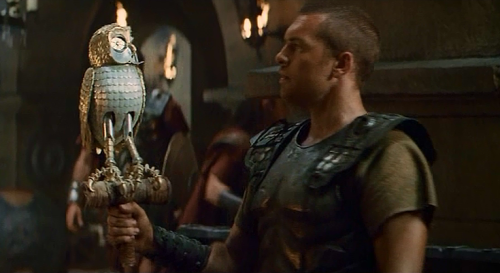
Clash of the Titans is a rather curious movie. Definitely all Hollywood with its CGI and key male-demographic-type writing, but before judgment is made, let's weigh its case.
After the gods won a war with the titans, their parents, one of the gods (Zeus, Liam Neeson) makes humanity so that their prayers can power the gods' immortality. However, humanity eventually gets frustrated with the gods' unresponsiveness and decides that it would be better off without them.
Enter the movie's hero, Perseus (Sam Worthington), the son of Zeus and the unnamed wife of Acrisius, erstwhile king of Argos. Acrisius is virulently anti-gods, so when he finds out that his son is Zeus' he demands that both his "befouled" wife and his bastard son be killed. But Perseus survives and is raised by a foster family of humble profession (fisherman).
Perseus winds up back in Argos where he meets Andromeda, hears Hades (Ralph Fiennes) threaten the city with the kraken because of the queen Cassiopeia's boasting of Andromeda's beauty, and winds up looking for a way to defeat the kraken. He's helped along his way by a cast of characters, including a mysterious woman named Io (Gemma Arterton) who has watched over him from his youth. Perseus succeeds, Andromeda is saved, and he becomes king, though he refuses to indulge his divine nature by joining Zeus in Olympus.
To its credit, the movie's plot follows the original myth of Perseus and Andromeda more or less properly. Aside from some details, the biggest change is that Perseus relies much less on divine help in the film. Names are also changed, mostly for the convenience of pronunciation and coherency, I imagine. After all, how can an audience member be expected to make out ancient Greek names over the sound of themselves chewing handfuls of popcorn?
Although they aren't strong enough to carry the movie alone, this flick puts forth two good characters.
Perseus himself is interesting because he isn't just some "chosen one" who struggles with his being chosen, but he actively works to do as much as he can "as a man" - refusing to take advantage of his divinity. When he does take advantage of that side of his nature, he doesn't exactly go through a conflict of conscience, but, the movie deserves some points for effort. Especially since main characters in this genre have a tendency toward a flatness that rivals a carpenter's level on an empty office desk.
The other character worth watching for is Io. Although her back story is altered from her myth, she's still given one, and one that acknowledges the rapacious nature of the gods. As Perseus' guide throughout much of the adventure she's fairly well-defined and *spoilers* when she's killed */spoilers* it comes as a real blow.
This impact comes because Io's one of the more developed characters in the movie and partially because there's not much else with the depth of her relationship with Perseus. Unfortunately, this impact is practically reversed when Zeus himself reverses her story's twist at the end of the movie.
Since Immortals is a movie in a similar vein, though for whatever reason not in as rich a portion of that vein, as Clash of the Titans, it's also to this movie's credit that it outdoes Immortals in two key areas.
First, Clash of the Titans acknowledges the fact that the gods are the titans' children, and accurately shows the kinds of mythological dealings that go on between the gods themselves. Second, Clash of the Titans is superbly lit. Rather than every scene being dark and drear with lots of grays and browns and blacks, this movie has bright forests, a dank underworld, and a shimmering Olympus.
The idea that prayers feed the gods' immortality is cool, and its nicely complemented by Hades' being fed by humanity's fear.
The animations that accompany Hades are also really well done - from his smoky black wings, to the blue flames that take over the regular orange ones when he enters a fire-lit room.
However, the animation falls apart elsewhere. The giant scorpion monsters that Perseus and his friends fight, for example, look like they're green screened in at some points - they look like they're separate from the actors rather than interacting with them. Likewise, the Stygian Witches' shared eye, looks less like a goopy orb than it does a ball of organized white, red, and black yarn.
The movie's plot offers nothing new, and though it's expansive scope puts it on par with John Carter, Clash of the Titans falls short of really having much "pulp appeal."
The major reason for this lack is the movie's utter failure to make us care about princess Andromeda. She's seen giving Perseus some water, giving some bread to the poor, and being chained up for the kraken to snack on, and that's it. While Perseus is off questing for a way to beat the kraken, shouldn't she be talking about her imminent death with her father? Maybe the unnamed religious fanatic could have some interaction with her?
Moreover, in Hades' original threat, the kraken isn't what needs to be sacrificed to, the kraken is what comes if there is no sacrifice. Hanging Andromeda out for the kraken just as the beast is lurching from the sea should only be putting a tidbit out for it before it gorges itself on the city.
In fact, that is the movie's biggest failing. The fate of Argos hangs in the balance, but the audience is given no real reason to care if Argos is destroyed or not, and further, if Andromeda is eaten or not.
Too much time is spent with Perseus and his companions on their journey and not nearly enough is spent back at the city with the princess. While they're on the road, Perseus and his gang hardly even talk about Argos - there isn't even a line like "What was life like back in Argos?" or "Why's King Kepheus so eager to turn away from the gods?"
Perseus is as much of an outsider as we are, and yet he seems entirely indifferent about the place that he's saving. As such, the audience can't help but follow suit.
Clash of the Titans has slick production values and is acted like your standard episode of Hercules: The Legendary Journeys, but the story’s cast of characters is like that in a big old RPG. However, unlike classic console RPGs that have characters and story going for them, Clash of the Titans has neither. Not consistently anyway.
The plot is poorly constructed, and aside from the slight variation in Perseus' character from other "chosen ones" and the interesting portrayal of Io, the movie really has nothing to offer but a few cool pieces of animation, refreshingly varied lighting, and a neat explanation of the purpose of prayer.
Unfortunately, even if these details were laid on an altar and ritualistically burned, no god's wrath would be appeased. So, Freya, fly high, and worry not about this one, though it offers a pretty face and mesmerizing eyes, its arms are weak and its purpose flabby. There are better picks for film Valhalla.
Keep an eye (or both) on this blog - next Monday it'll host a logical look at wind power in Ontario, Wednesday there'll be a blog entry on the newest news, and on Friday a write-up on the good in The Darkest Hour will be up for the reading.
As the first part in the next four part series here at A Glass Darkly, and since the new moon means a lack of light, this entry is a pooling of information about wind farms - specifically in Ontario. However, it is by no means complete and will point to things that are a little more complete when necessary.
So what's the skinny on these three-armed towers cropping up over the countryside in recent years? In short, they're part of the Liberal party's plan to help Ontario to go green. The cost has turned many off of the idea, and the noise that they are reported to cause has turned off a few more.
However, according to the IESO website's tracker, this is how much energy Ontario's turbines are currently outputting:
A megawatt is 1 million watts, and according to WikiAnswers, one megawatt could power 1000 average American homes for 1 hour. Or, it could power an average home for 1000 hours. Since Americans and Canadians have roughly the same power consumption habits (multiple computers, TVs, charging devices like phones and iPods, and electronic kitchen and cleaning implements) using American statistics doesn't seem particularly off.
An estimate of 750 homes on the megawatt by the Toronto Star, gives a similar picture.
What gets people's dander up about wind farms, though, is that they've come in at tremendous cost. Whereas other generators get about 7.4 cents on the kilowatt hour, wind generators get 12 cents.
As Ontario swings into more wind power generation, though, A.J. Goulding of the consulting firm London Economics believes that there's potential for a vicious cycle in which the burgeoning wind industry would create jobs that would only compensate for those lost in other energy sectors.
Among those on the ground, so to speak, there are also concerns that wind turbines are responsible for headaches, dizziness, sleep disturbance, and/or hearing loss. Though these concerns are addressed in a report issued by the Chief Medical Officer of Health of Ontario, the conclusion appears to be that wind turbines are not responsible for adverse health effects from a strictly scientific standpoint.
I Am Number Four is a movie that rightfully spelled the end of its franchise.
Now, it's not that the movie is outright bad. No. Rather, it's because it doesn't play enough to its own strengths. One of the common criticisms of the flick is that it's a mash-up of a number of other genres (thriller, sci-fi, action, romance, teen), and that criticism definitely holds up.
In fact, just like the new kid in school (or our hero in the movie's case) who tries to hide his quirks in order to fit in, this movie puts far too much effort into being hot genres and mimicking popular movies of its time that it completely loses sight of just what it actually is and turns out as unoriginal and somewhat convoluted.
However, it still has something, and that something is slightly remarkable.
A young man of high school age (John, played by Alex Pettyfer) is hiding a secret. For he's not really human at all, but some kind of alien refugee. And now, the alien species that destroyed his home planet and his people (the Mogadorians) is in hot pursuit, and he's revealed as his peoples' last hope (and member, at least at the movie's beginning).
Although John tries to fit in as a regular human teen and remain invisible, he's always doing something out of the ordinary that forces him and his guardian Henri (Timothy Olyphant) to move from place to place.
The movie follows John and Henri in their newest locale: Paradise, Ohio. John falls in love with a local girl (Sarah, played by Dianna Agron), there's a bit of romance, the Mogadorians find him, someone close to him is killed, and John and the small group that he's gathered by the movie's end successfully face off against the Mogadorian band that's currently after him.
With the immediate threat of the Mogadorians dealt with, and on the advice of Henri, John and the mysterious Six (Teresa Palmer) set out to find the rest of the survivors from their planet (since, apparently, there are actually four more).
What exactly happens when all six of John's species come together is left ambiguous, but it's said to be good, and it's the stuff of sequels. Sequels that will probably never be.
So, given its fairly bland plot, what's the good of this movie?
In spite of the standard storyline, the movie itself - the way it tells the story, the writing at points, and the sci-fi elements - has a kind of "pulp appeal." Just as was the case with John Carter, it has a kind of 90s JRPG feel to it. There's some imagination at work in the details and the aliens, though these seem to have been toned down since the movie is, after all, trying to be almost all genres to all people.
Nonetheless, the movie's action is consistently impressive; the action sequences are tight and short. This movie's fight choreography is excellent, and in it all of the attacks and counters and blocks look like they're being thrown for real. So the animators definitely need to be congratulated on this count.
Characters are not this movie's strong point, but one character stands out: Sarah.
She's the token love interest, but with a twist. Rather than being some humdrum local girl, the quarterback's babe, she's the quarterback's ex-girlfriend. However, she's not torn up about it and trying to force herself on John as some sort of replacement.
Instead, she's entirely over the quarterback, and openly dreams of what the world holds for her. She's a photographer and runs a blog that's so popular locally that everyone seems to know her name. The fact that she's totally cool with John just spontaneously looking through her private scrapbook is definitely questionable, but otherwise, she's a gem amongst coal.
The rest of the movie's characters, however, are much less undeveloped.
The main is just a handsome guy with chiseled abs that loves to display these for the camera time and again.
The quarterback is your standard high school jock, though, out of nowhere, he apparently still has feelings for Sarah.
The nerd character is, well, a nerd.
And Six is just an aimless blonde bad-ass who blows shit up and uses big guns while speaking with an English accent.
Characters are not the movie's strength.
The CGI used for the monsters in the movie is also lacking. Rather than being clear and crisp, its dark and murky. This works from an atmosphere point of view, and is consistent with the dark tone of the scenes in which these creatures show up, but even then crisper textures would make them look all the more real.
But where most of the characters are good attempts, the animation is hit and miss (remember those fight scenes!), and the plot itself is unoriginal, the acting is where this film takes its biggest spill.
The only character on screen that's acted well is Henri, John's guardian.
John himself is too emotionless at the wrong times (in the scene where he and Sarah first kiss he looks more dumbfounded than impassioned even though they both go in for the kiss at the same time); the quarterback plays the jock well, but clumsily brings in emotions; and Sarah, though seemingly eager for the romance and her photography, plays the rest of her role lukewarmly.
The epitome of this off acting, though, is delivered by John when he so wittily replies to Six's exhortation to "I just saved your ass" with "you should be watching your own ass" delivered in a strange teenage deadpan:
Now, this movie does have the same sort of "pulp appeal" that John Carter had, and the idea of a teenage love interest whose fairly self-sufficient and actually matures and becomes stronger after a breakup rather than more and more obsessive (*cough* Bella Swan *cough*) are both great things.
But what sets this movie far apart from the unfortunately under-viewed John Carter is that the bulk of I am Number Four falls flat.
The movie's plot is derivative, the acting lame, the CGI not quite crisp enough. Nonetheless, this is the sort of movie that you might want to have playing while you're doing a lengthy, quasi-monotonous task, like baking bread or a making a bulk batch of cookies.
Plus, the movie is based on a co-authored book. I'm less intrigued than curious, but I would still give it a flip through, and so a little bit of the "Green Lantern Effect" is at work here as well.
So, Freya, raise this one up, but feel free to do so whenever you're next in the vicinity.
Next week check back here for the first part in the next four part series on a major issue, an article on some of the newest news, and the hunt for the good in the 2010 remake of Clash of the Titans
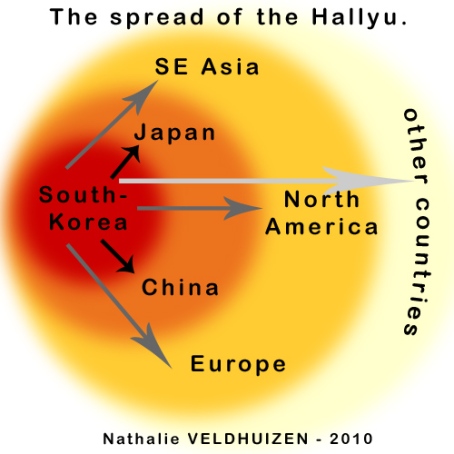
Something that's been in the news here and there over the past few years is the presence of a cultural Korean Wave.
This Korean Wave, or Hallyu, refers to the slow spread of Korean pop culture throughout Asia, Europe, and North America.1 When the National Post reports on something, you know it's got to be good, right? Plus, there's even a North York couple that moved to Korea, started out as teachers, but that now blog full time about Korean culture and music.1
In some sense, this trend could be compared to the rise in the popularity of Japanese culture abroad in the 80s and 90s in the form of increasingly easily accessed anime and the console wars between Nintendo, Sega, and Sony. Perhaps Korea has less that's unique to offer in the realms of animated TV shows and video games, but both cultural spreads are definitely prime examples of "soft-power"
Soft-power "is the ability to obtain what one wants through co-option and attraction."2 This definitely describes the kind of cultural influence that foreign lands have had on Western culture and aesthetics for quite some time. Rather than trying to do what the West itself did in many colonial instances and force their culture back on the West, places like Korea and Japan are merely creating things that appeal to Western consumers.
In some cases, this means creating a hybrid culture. As Kim Seong-Kon points out, the Korean Wave is just such a hybrid form since K-Pop and K-Drama tend to be combinations of traditional Korean and Western cultures.3
Kim argues that this sort of hybrid culture is not a true representation of traditional Korean culture (the "high brow"), but he also cedes that the hybrid culture that's set off the Korean Wave is something like "John the Baptist, preparing the path for Jesus’ arrival."3
Yet, with soft-power, and the appeal of hybrid cultures, is introducing someone to a 'lite' version of a culture really going to entice them into a full-blown interest in more traditional forms? Not everyone who watches anime is going to try to learn about the Sengoku period or try to find out just who Bashō is.
Likewise, the current rise of Korean pop culture isn't going to necessarily lead people to delve deeper into traditional Korean culture. At least not in the numbers that people who say that "hallyu will conquer the world" or that compare the current Korean Wave to John the Baptist imply. Watching My Girlfriend is a Gumiho or listening to the latest by Super Junior, won't necessarily bring people to look into Dangun or research the poetry of the Goryeo period.
That's the thing with soft power, it can be the hand that brings a horse to water, but the horse is ultimately the one who will either dip its tongue in the water, slurp a few waves, or just stare at its own reflection.
This is the final piece in my four part series on freelance writing. It's also written in a more freewheeling style, though a logical order is still loosely imposed. You've been warned.
Freelance Writing is it? The sort of thing that requires a quick mind on the page, and in the checkbook. It'll keep you sharp, but it can tear you apart, too. Academics have GoogleScholar to figure out how many people reference their research, but to think of how many people could see your writing if you had hundreds of articles, stories, and clips circulating about. That just adds to the rush.
Teaching can impact a room, but the written word can impact an audience severed by space, and even by time.
Writing in general seems to have more of an impact than teaching - though teaching might have the potential for a deeper impact.
Freelance writing doesn't need to be something you go broke for, either. It's just about keeping up on the jobs. And with stuff like content farms out there now - forget about it. If you can take the pittance they pay when times are tight, then those times will be loosened just enough. Of course, that's if you've got the time - or will.
Signing up for all of those sites takes a lot of organization, too. You need to keep all of that account information straight, and then you need to figure out how best to keep them all checked and responded to.
Yeah, being a freelance writer is maybe more possible now than ever, but it also seems to require more organization, too. Makes you much more of an entrepreneur when the whole damn internet could use your article. Not to mention the few offline publications still afloat and hungry for words.
The offline ones (and those "e-zines") pay better, too. Then again, with the old procedure of query, draft, submit, you deserve extra. Not like write, submit, pass, get paid. Gee-zus.
Anyway, all that organization's needed up front. Being a freelance writer isn't like becoming a cop or a getting into med school program. You need to plan your specific moves much more carefully if you want to be successful right out of the cage.
You need to know how much you'll charge, how much you can do in an hour, what sort of work you want to concentrate on, how many hours you can work a week, what sorts of outlets you'll use to look for work in the first place. So much more organization, and all up front. None of this dicking around with training and learning in a place separate from the real thing, only to be faced with something almost entirely alien when you finally get to the job itself.
No, as a freelance writer you know up front what you're getting into or you just don't make it. Some might muddle their way in, but they're the ones who learn quick. Real quick.
Quick learners get ahead as freelance writers, too. They know just what it is they need to do for a client, they can see it in their job offer, smell it in the proposal or description. Then it's no problem to just go with it, and run along with all that cash flow pushing you on.
Back to that teaching alternative - if you know enough to write things, you know enough to teach things, right? - it's not entirely a sure thing anymore. Anywhere local, anyway. Even according to the recent Transition to Teaching Report, only 21% of graduates say they've got full-on teaching work within their first year after graduating (in Ontario). Shit. That doesn't look good. But writing, that's always gonna be around. As long as you get a good start, find your stride, it'll just keep going.
Y'know, more than anything, writing's more liberating, too. Teacher's can keep their summers off, freelance writers are doing what they love and what they love's not work to them at all. But teachers college is like a band-aid being used in the place of gauze and surgical tape, a temporary solution that might help in the long run, but that just doesn't stand up to the potential in writing.
Still, I plan to accept one of the offers I've gotten for teachers college and to see where writing takes me in the interim. Writing and teaching might be like feuding brothers in my mind, but they're still kin.
Hideaway is a movie that went the way of its featured musical acts: around in the 90s and now long since forgotten. But, it starred such 90s stars as Jeff Goldblum and gave Alicia Silverstone one of her early roles. And it's based on Dean Koontz's New York Times bestseller by the same name.
Given that sort of pedigree, let's see where the movie takes us.
Hideaway is the story of a father (Hatch Harrison, played by Jeff Goldblum) who is killed in an auto accident. But, despite being dead for over an hour Hatch is resuscitated - just as he's settling into the afterlife. Unfortunately, something follows him back into the physical world, and Hatch finds himself psychically linked to a crazed satanic serial killer known as Vassago. Eventually this serial killer sets his sights on Hatch's daughter Regina (Alicia Silverstone).
So, as Hatch struggles with the apparent madness brought on by the shock of his psychic connection, he also works through its repercussions with his family (his wife Lindsay is played by Christine Lahti) and ultimately strives to protect his daughter from a threat that only he can see coming.
It's a hard sell, but this movie gets really good after the first hour. Around that time Hatch is fed up with his visions and becomes recklessly intent on gunning down this serial killer himself, since the police have proven ineffective. So, he does what any god-fearing American in the 90s would - he grabs a shotgun and drives around, following his visions to Vassago.
The action starts at about the 1:08:00 mark, and involves an awesome chase section in which all aspects of the movie's scenario finally come together. The section then ends around the 1:33:00 mark, some 10 minutes before the movie ends.
Thirty minutes before this chase section starts, the movie finally begins to explain things in a relatively clear way, drawing connections and covering plot holes. But it's also around this time that Hatch begins to do some very light Goldbluming. Not up to Jurassic Park levels, but it does begin and come back on and off throughout the rest of the movie.
For the 90s, the animation in the scenes of the afterlife are also fairly well done. The tunnel sequence and the "soul" animations are pretty smooth and look quite clean. If you're thinking that the animation's like that in the game Microcosm, you're way off.
And, although he might not have been a name on any theater marquis where this movie was playing, it also stars Kenneth Walsh as a hardboiled cop. His performance here isn't as madcap as his Windom Earle in Twin Peaks, but he's still fun to watch.
This movie is an unfortunate sufferer of Mistaken Suspense Syndrome. The first hour is spent slowly and awkwardly establishing the psychic link, the serial killer, and the impact of the link on Hatch's sense of self and home life. During this hour it also confuses itself for a melodrama as character's go from calm to furious in seconds, and relatively small incidents are made out to be bigger than necessary.
In fact, aside from that golden 25 minutes near the movie's end, the most action packed sequences of the film are tight zooms on circling and underlining.
{Two of the dramatic high points in the movie.}
Of course, as a horror film it's necessary to build suspense, but the entire movie is sandwiched between two cgi scenes that suggest that it's really about some kind of spiritual psychic battle between light and dark. Thus, suspense around the outcome of this battle isn't really built up at all but meandered around as if the writers didn't know how to fill the first two acts with interesting build up.
Audiences are prepared for the excellent pursuit of and clash with the serial killer when it comes at the movie's climax, but the hour spent establishing everything could be trimmed down to 30-40 minutes with ease.
After heaping so much praise on the movie's climax, it might seem odd to mention it as one of the movie's failings, but the climax could also be shortened. Right around the hour and thirty three minute mark, in fact - why so precise? Because that's when the 90s animation comes into full, crappy effect as a dark and light creature are animated into the real world to fight it out.
The CGI in the climax's end is so obvious that it completely destroys any suspension of disbelief you might've had going and changes the movie's tone so radically from searing psychological thriller to campy horror monster fight that the film implodes.
But, the final nail in Hideaway's coffin comes when, after the credits, Hatch and Lindsay are in bed and share a good laugh after Hatch dreams that they've resuscitated the serial killer. Because there's nothing like a good, lighthearted joke after living through a psychically and psychologically terrifying event, right?
Ultimately, Hideaway fails to offer coherent storytelling, suspense, or resolution except for those shining 25 minutes near it's end. If that was released as a short film, I would gladly say, Freya, raise this one up, but since it's trapped in an hour and forty seven minute long maggot-ridden corpse, you can, lady of the Valkyrie, leave this one to fester in its pit.
Next week there'll be more in this space - Monday's update is the last in my four part series on freelance writing (I'll be considering it in light of teachers college acceptances), Wednesday's will be all about the newest news, and Friday's is set up to be another attempt to resuscitate a 'terrible' movie.
Since getting back from a jaunt in Toronto to see the inestimable Thomas Dolby at the Mod Club late yesterday evening, things have been busy around here. But I had just enough time to pop into my inbox and find an article of great interest.
It's a piece about Brad Crawford and his documentary about arcade culture in Japan and the US. A child of the (mid) 80s, I missed the brunt of the arcade scene in North America. Luckily, however, small towns tend to change at a slower pace than the rest of the world, and so the small beach town that we spent a few weeks in during each of my childhood summers is fondly remembered not just for lakeside shenanigans, but also for the rolls of quarters spent in the town's arcade.
Reading this article got me thinking, though, just what is the difference between the US (and, being similar at least in gaming culture, Canada) and Japan when it comes to their arcade scenes? Why did major arcades die out in North America but stay alive in Japan?
Since Crawford's documentary (called 100 Yen: The Japanese Arcade Experience) is still in post-production it's not possible to turn to it for answers, but Crawford reveals enough in the article to suss out a few of the reasons why the arcade suffered such a diverse fate in the East and West.
Unlike the present perception of Japan as a high-tech, video game-accepting culture, around the time that arcades were at their peak (in the 70s and 80s), it was a common view that they were gathering places for hoodlums.1
But, rather than let this image linger, the parent companies in Japan (Crawford mentions Taito and Sega specifically) actually worked to help clean up this image and to make arcades more family friendly, the kind of places where people could meet up after school/work for a few friendly virtual bouts.1
And, wouldn't you know it, the makeover worked. Arcades are now just that - a physical space where people can gather to play live, in-person multipayer games.
Apparently, along with nostalgia, the same desire fuels the indie arcades in North America. As Jared Rea, lifelong arcade gamer, puts it, playing games like Street Fighter online is like “playing [against] a ghost.”2
But is this desire for a more intimate multiplayer experience really such a major force behind the arcade scene in North America?
Why aren't people just playing at home and inviting friends over? Unlike Japan (where inviting people to your house is rare),1 it's pretty common to have some friends over to play video games in North America.
Though if you have people over, you inevitably wind up playing equal parts host and gamer. Arcades take the hosting concern off of your shoulders and foist it onto people who are actually in the hospitality business. Through tournaments and such, arcades are also places where people can more easily make new connections and feel a stronger sense of community.
Of course, such a sense of community can also be gained at tournaments based on console games, something that a few indie arcades host in addition to those based on cabinet games.2
So then, why continue to have places that have cabinet games? Arcade cabinets are expensive, it's hard to get newer models and upgrades, and arcade gaming is still a niche that makes for a poor profit-oriented business.2
Is the power of nostalgia over those who grew up with arcades so great that it's worth the time and effort of a few to offer a glimpse back at 'simpler times'?
Is the North American gamer so starved for a feeling of real, physical community that they don't mind paying to play games that they could play with friends for free on a home console?
Is this indie arcade culture a reaction to the trend toward putting more and more of gaming online?
To live off of your words would be like living off of the bounty of the land. At its best it could be like life in the mythical Golden Age, where the earth's abundance came naturally and humanity had no need for toil.
In this metaphor though, things work backwards. Instead of staring in a Golden Age, any writer starts in the Iron Age - maybe even the "Clay Age" considering how low the pay is at many content mills and freelancing sites.
But through your writing, you, like Merlin, could travel backwards in time to a Golden Age. One where your words are being licensed for translations and adaptations, where they're earning royalties, where they're earning you a tidy portion of shared profits, or where the work just flows and your rates are fair and enviable.
Of course, all of that comes after the iron's been turned into gold. If alchemists still haven't figured it out, then it's certainly no easy feat.
Yet, like the alchemists and their mad quest for that mystic formula, the potential to live sheerly from words is what fills the pursuit with promise.
As bipolar as it can be trying to do something so artistic (or even just psychological) in a town of engineers, labourers, restaurateurs, clerks, servers, and such, it is a rewarding thing to do.
On the one hand it's possible to show all of these concrete-thinking, left-brained people that you can live from something as airy as words and ideas, and on the other, well, you can show yourself that you can live on such airy things as words and ideas. Because that's the biggest hurdle starting out. Really, truly, and seriously believing that you can make it as a writer. It's not always a pretty process, but there are certain things that can help you along.
Being part of a writing group is the best way to start. Regular feedback and the ability to talk to other people about writing can jazz you up and make you feel ready to tackle any project, to mould words into any form.
Getting paid to write, definitely helps. Even if it's not a rate that's going to allow you to work only hours a week, getting something for your writing beyond praise, accolades, or even just serious acknowledgement is great.
Having people ask you to write for them is also a great boost, especially if this contact is made online. For such a person practically could've worked with anyone in the whole wide web, but by coincidence they found your stuff, and your stuff was just what they were looking for. Such an event is great. It's grand. It's a big help when the people around you go silent upon your announcement that you're a writer, or regularly bring up that such and such store has a help wanted sign in the window.
But that's not to say that being a writer means you're a one-job person.
People write and hold down "regular" jobs, too. But that's not what every writer does. After all, there's that freedom that comes with writing, that ability to work as hard as you like at it. you can throw all of your weight into it because of one thing or another, or you can just do it, but do it seriously, in whatever spare time you can muster.
Again, here comes a generalization, but if you'd just ended a stint in graduate school and originally been looking to become a professor to "feed your writing habit," then you're probably not going to want to sling fries or assemble boxes while writing on the side.
Turning away from the rush, though, there's the uncertainty. It might mean putting on a happy facade or joining the break room mumblers, but slinging fries and box assembly are at least steady jobs.
People will always love fries, and frozen fries come in boxes. You might not necessarily become CEO of either company, but working at that sort of thing is certain, and probably includes some benefit package or other.
These perks mean there's no need to worry about making it on your own, since you know that at the least you'll be getting your livable wage paycheck at the end of every two week period. And if the work is psychologically draining, well, isn't that what the time that you're not working is for?
Writing isn't necessarily different, though. It can be just as stressful, just as draining at times. But if you're not already plan-savvy, trying to be a writer from a room in your parents' house in a small town definitely gets you planning seriously, planning hard.
Plus, planning ahead doesn't have to be all that intimidating. It could just be a matter of setting goals of having so many articles finished in a given time, or so much money made in a month. Like almost every other aspect of being a freelance writer, it just comes down to will power. Saying you'll do something (even if you're just talking to yourself) and then doing it.
So, freelance writing, maybe it's a long climb up to that lofty Golden Age, but you'll definitely have plenty to write about when you get there. I know I will.
Stay tuned throughout the week for an opinion about some recent news on Wednesday, and a review of Hideaway on Friday.
The article is an opinion piece by John Doyle, wherein the excellent columnist explains his utter dislike of Game of Thrones. He dismisses it as being aimed at teenage boys, as pompous, and as being based on "books, which are written in the most lividly purple prose."
The major thrust of Doyle's argument, or what it all comes down to, is that Game of Thrones doesn't come from "a bona fide cultural impulse," that it is slick and inauthentic. He uses the Arthurian Legends as an example of something coming from a more authentic cultural place, but this makes me wonder what he considers to be "a bona fide cultural impulse."
It's true that people no longer go around in suits of armor waving sharpened beams of steel at each other, nor do we (in North America) live under any kind of monarchy that holds as much power as that depicted in Game of Thrones.
But the stories of knights and quests and damsels and dragons in the Arthurian legends aren't necessarily perfectly in step with the reality of their times either. Stories are always an idealization of their source material. TV series set in the modern (or near modern) day, resonate because their characters or situations can be related to, but that doesn't mean that their characters are any more "realistic" than those on Game of Thrones.
Tales of chivalry and knights were told and retold in the medieval period because of their great symbolic and allegorical potential. After all, these stories were supposed to instruct as much as entertain. These dual purposes of storytelling might not apply as much to the original Arthurian tales, but by the time the stories were committed to vellum/parchment/paper these purposes were of chief importance.
Moreover, after Christianity took hold over medieval Western Europe there was also the sense that things needed to be written solely for the propagation of doctrine. Anything that seemed subversive was suspect, though some writers (like Chaucer) tried to escape suspicion by including written retractions of anything that they thought might seem "sinful" with their work.
But the medieval period is a time from which we really only have written cultural records from a single group - that made up of the nobility, the clergy, and those that both of these classes educated.
In a society like ours where there are multiple major cultures co-existing (and plenty of vibrant subcultures), who can say what comes from "a bona fide cultural impulse" and what doesn't?
It may ring just as inauthentic to John Doyle, but perhaps the columnist should look into the Society for Creative Anachronism. The fact that its ranks aren't swollen with carnage-hungry, hormone-driven teenage boys might just make clear that modern cultural impulses are not so easily nailed down.
Nine years ought to be enough time to give you some perspective on a piece of art, right? Even if it was considered utterly terrible when it came out.
That's the thinking behind this review of Gigli, the 2003 flop starring Ben Affleck (as the title character Larry Gigli), Jennifer Lopez (as Ricky), and Justin Bartha (as Baywatch-obsessed Brian). So, now that it's 2012, is it possible to view this movie as anything other than the utter waste of time that critics regarded it as those 9 years ago? Let's find out.
Gigli follows Larry Gigli as he follows through on a peculiar job. His employer, Louis (played by Lenny Venito) asks him to essentially kidnap and keep someone's kid brother (Brian) for the purpose of extortion. But, Larry's kind of a screw-up, and so Louis also assigns Ricky to the job, without Larry's knowing it. This completes the patchwork nuclear family that is the movie's focus, and the two navigate the difficulties of keeping a young man with "mental deficiencies" occupied and of their own emotional baggage while trying to complete their job.
Now, for the purpose of marketing, the movie's classed as a "romantic comedy." It does have the basic requirements to fit this bill, namely, two characters who bond over a weird/comic situation and end the movie closer than they were at the start. But, the relationship between these two isn't quite romantic in the way that the genre designation implies.
Christopher Walken steps in as an info-dumping cop who reveals to Gigli and Ricky that they're holding the brother of a federal prosecutor. To his credit, Walken also delivers one of the only laughs of the movie with his surreal line about what might happen if you put pie à la mode on your head: "your tongue would slap your brains out trying to get to it."
Al Pacino comes on later in the movie, as the character that the kidnapping is supposed to help. His performance strangely mixes an over the top style with a cool, understated demeanor. His is also among the darker scenes of the movie as he blows someone's brains out and the camera pleasantly zooms into a fish nibbling away at the detritus. It's a curious shot that stands as an apt metaphor for the movie - it turns your brain into fish-food, if you let it.
The movie also co-stars Affleck's naked torso and music video levels of J-Lo's bare skin.
However, cameos - especially short, single-scene deals - and cheese/beefcake are not as potent a force for good as they could be. Especially not alone.
Let's start with the premise. The idea of two mismatched mob contractors being assigned to watch a young man who is mentally disabled sounds strangely like the next generation of reality TV: a couple would be paired up, and then would adopt a child with a disability for a few days, and the audience at home would sit back and watch it all unfold. And unfold it does in the movie, as antics follow and, of course, we're treated to some moments that are supposed to be endearing.
Unfortunately, these almost endearing scenes end with weird lines like this about where they film Baywatch "That's where the sex is," or about what looking at the women of Bay Watch does to Brian: "they make my penis sneeze." Curious, sure, but the stuff of a rom com?
After all, one of the key parts of the movie is the romance between Gigli and Ricky.
To be fair, it seems like writer/director/producer Martin Brest was trying something new here. Trying to shake up the romantic comedy genre.
For, unlike in other romantic comedies where the person "in control" of the relationship shifts from one act (or even scene) to the next with comic results, Gigli puts Ricky into a position of control as firm as her own, co-starring, butt.
Sure, it's refreshing to see a movie centered on a romance where the woman is in control. But adding Ricky's lesbianism and dissatisfaction with men, and Gigli's being so caught up in his own masculinity that it would make overly macho characters like Vigoro of Skies of Arcadia wonder about what he's hiding brings the movie's romantic aspect tumbling down.
{Vigoro, showing Gigli how it's done.}
Further, because the center of control in the Ricky/Gigli relationship never really changes there's very little sense of an interplay between the two characters.
For example, when Louis tells Gigli that they'll need to cut off and mail out Brian's finger to show that they're serious, Ricky takes Gigli aside to chat with him about it. This leads to her asking if he's with her and he says "sure," which leads to her saying that "sure" isn't enough of a commitment and that he should say "yes." So she asks if he's for not cutting off Brian's thumb again, and rather than trying to take back some power in the relationship, or at least being a little flippant, Gigli exhales a breathy "yes."
The scene's potential for laughs is lost, Ricky is shown to have power *over* Gigli rather than to be sharing it with him and the romantic tone is irreversibly set.
It doesn't help matters that throughout the movie the two have their defenses up and bristling, Gigli showing far more signs of slackening than Ricky by the movie's end. Gigli's dopey-ness around Ricky is in character, but the dope being romantically entangled with the powerful woman doesn't really make for a romantic movie scenario. It's better suited to a Saturday morning cartoon.
I can appreciate the unique weirdness of the premise. And the genuinely entertaining cameos. But the core of the movie is off kilter. The world wasn't ready for a rom-com where the female character can seriously say "I thought you wanted to be my bitch" in 2003, and it still doesn't seem to be in 2012.
So, Freya, cut off the thumbs so that Walken and Pacino can be saved, but leave the rest to further rot.
Next week, check back for a stream of consciousness take on freelance writing, an essay about some of the newest news, and for a review of the 1995 Jeff Goldblum horror flick, Hideaway.
A recent article from newswise points to some research being done at the University of Mississippi by one Professor Gregory Heyworth. Professor Heyworth's query: Was Shakespeare an Attorney?
Professor Heyworth bases his question on a comparison of a known signature of the Bard's with one found on the "Archaionomia," a famed Elizabethan collection of Anglo-Saxon laws. Using the newest in digital imaging technology, Professor Heyworth and three graduate students were able to impose the signature in question on one that's certified to be genuine. However, the article never really gives a conclusion to the story since the research appears to be ongoing.
In any case, that's one detailed look at old ink.
But it does raise the intriguing question of whether or not Shakespeare was a lawyer. It's intriguing because so little is known about his life between his time at grammar school and his fame as a playwright. If Shakespeare was a lawyer of whatever stripe it could also nicely relate to the abundance of legal references in Shakespeare's plays.
However, it doesn't have to be that simple. Even Professor Heyworth and his team admit that it might not be the signature of the famous playwright William Shakespeare that they're superimposing over the Bard's authentic mark. "There were multiple people with that name" at the time," Professor Heyworth noted.1
Even if it does, someday, turn out to be the Bard's signature and it comes to light that he indeed was an attorney before he became famous as a playwright, there's the question of his education.
If the records we have for his birth are accurate, he started life shortly before April 26, 1564.2 However, rather than going onto university at the the age of 14 (as was standard at the time), he was pulled from the system. For his father had gone too far into debt, and had lost his social standing in Stratford,3 due in part to charging too much interest on a loan and, possibly, due to his being a Catholic.
Although Shakespeare becomes hard to track after leaving the school system, it's fair to say that if he had gone to university and studied law there would be some record of (or from) his doing so.
A lack of such a record could be chalked up to a loss of these documents in a fire or a theft, but that's an event that wouldn't have been forgotten or left out of history books.
On the other hand, perhaps Shakespeare's education in grammar school and contemporary London was enough to land him a position as a document reviewer of sorts. Someone who didn't study law to practice it, but who was well enough aware of the way language worked to be a legal copy-editor. That kind of exposure to legal material would definitely brand it into your memory and then you'd be able to pull it out for plays and cocktail parties with ease.
Such a proposition might not be as wild as you think, since, much like modern America, the people of Elizabethan London were often suing each other.
A lot of their litigiousness had to do with accusations of business malpractice, family relations (usually in-laws and step-children), or with interest and loans. This last one was hotly debated at the time because orthodox Christian belief bans interest, whereas economic theory and practice had no problem with it. Loans with interest helped keep people from being cheated, though charging 'too much' interest was regarded in the same light.
Further, from what's left in documents of the time (diaries, plays, treatises), it seems that the law was not just the exclusive concern of a group of highly trained individuals. These individuals definitely would have an incredible depth of legal knowledge, but the common man or woman might also have a considerable amount of legal know-how when it came to inheritance or the maximum interest rate. Not only were they litigious, but the common people of Elizabethan England did consist of a trading class, and this trading class would've had to have dealt with the law in some way or other.
Now, if Shakespeare's plays are packed with legal terms and references, why didn't these discourage or disinterest playgoers? If the playgoers of Shakespeare's day just wanted bawdy comedy or gory spectacle, why bother going to see the latest play by the guy who puts all of that the legal jargon on the stage? Either people were interested in such things for some now lost reason, or these references resonated or intrigued because of some level of familiarity.
The fact that Elizabethans weren't shy about bringing each other to court suggests just such a general familiarity.
So, the question "what were playgoers getting out of these legal references, if anything?" needs to be added to the question of the Bard's being a barrister. Maybe these nods to the law and its terminology was a bit of a thrill because playgoers were familiar with them. Maybe they worked because such references offered special insight into a society that seemed alien and closed off to them (that of a legal specialist, who knew the law's theory as well as practice).
Feel free to add your thoughts in the comments.
And, on Friday, check back here for an attempt to redeem the megaflopGigli.
Much like any big decision, after you've got the facts, it's important to look at things logically. When it comes to considering going full time as a Freelance Writer, there are a few things in particular that need to be considered.
Since some might say it's the most important part of a job, let's start with the happiness factor.
Freelance writing seems to be an idyllic career move from a personal standpoint. I've always wanted to write, and I get a definite rush from selling that writing or being paid to do it. So, the life of a freelance writer would be quite rich in the fulfillment sense.
Plus, there's the flexibility that comes with being a freelancer - the notoriety and the prestige even. The last two will come over time, as more and more articles, content, and stories are written and seen. That leaves flexibility as the one immediate "intangible" benefit.
Now, flexibility can be hard to manage at first. The willpower to sit down and write is sometimes overshadowed by the willpower to just hunker down and play more Skyward Sword or Mother 3 or to hang around on YouTube.
Still, it seems that underpinning flexibility is "self-discipline," something my erstwhile kung fu instructor explained as "the will to do what you don't want to do but have to do." After six and a half years at that learning forms (aka katas) and how to do a variety of push-ups, sitting down and writing seems easy in comparison.
However, as a person whose only worked service and research jobs in the past, getting used to the idea that a "job" will end but your work will continue takes time. At time it feels like a fisherman might after seeing his latest catch devoured by a cat. Working multiple jobs at the same time definitely cuts down on the deflated feeling after one's done, but then we get into the fact that freelancing is not stable work.
This is probably the biggest con of going full time with freelancing. After all, unsteady work means an unsteady income. Though as a member of the "Boomerang Generation," it seems logical that the best move is to go for the opportunity that will pay off the most in the long term rather than the short term.
Freelancing in general is more of a slow burn. Income gradually pops over it rather than needing to be pulled out in wads like a propane tank in a bonfire. Besides, as long as bad months still see at least $800 and good months see at least $2300 coming in, then things will keep balanced.
Of course, anything with great promise carries with it great risk. Though, the lack of steady work and cushy company benefits of any sort right now don't seem particularly harsh. With a good name and a solid reputation the work will grow steadier, and the pay will get better. Plus, there are writers guilds and groups that can take the sting out of some costs of living.
Yet, there's a word in that sentence that is still troubling: "will."
That word is troubling since it makes it clear that freelancing is something long range, long term. Those sorts of jobs are foreign territory. In fact, long term planning has never really been something I've done - opportunity has simply linked to opportunity in the past. So the long range is a range I've never really needed to worry about. It's a range I'm not used to worrying about.
As a result, I've got some mixed feelings on that front of freelancing. But they'll be saved for the full moon next week.
Before that happens though, come check out an article about Shakespeare's possible ties to the legal world on Wednesday, and a Friday review of the strange-sounding Gigli.
John Carter: The Poor Labelling Continues with "Flop"
According to Disney (as reported by the Globe and Mail), John Carter is a flop. A movie that cost the studio $200,000,000,000.
Some critics have panned it as a corporate product (as James Kendrick has it) or as a movie that's like a bad mattress, firm at either end but saggy in the middle (Rick Groen of the Globe and Mail). It definitely can't be denied that the movie's got a shiny polish, or that it does have a middle section that involves a lot of zigging and zagging about.
But, having just seen the movie, it's clear that neither of these qualities take away from a movie that's as pulpy as its source material. Things are fantastical, and there's a lot of wandering around the world of Barsoom in the movie's middle, but the characters are fine - surprisingly deeper than what you'd expect from an big-budget action movie.
Plus, unlike another sci-fi/fantasy romp that involves a 19th century American (*cough* Jonah Hex *cough*), John Carter's main character, John Carter, actually develops and changes as a human being.
And the sets and effects don't take away from the story since they match the overall feel and atmosphere quite nicely. Heck - even the alien characters don't go Jar Jar and upend the whole movie by being obnoxiously pandering.
So with an intriguing plot that's at home among the epic stories of Final Fantasy III/VI or Breath Of Fire II, pretty impressive sets, costuming that makes the Barsoom society real, fight choreography that is entrancing to watch, and two strong lead characters, what went wrong? Why is John Carter an official "flop"?
Marketing. And, possibly, timing.
At the theater last night the first showing of the Hunger Games was sold out, though the movie was playing on three screens.
Granted, John Carter came out two weeks ago. But, even that is too close to the buzz behemoth that is the Hunger Games.
Stepping away from sheer timing, ask yourself, before John Carter hit the screens did you hear anything about it? See any previews that really grabbed your attention?
Just compare this official trailer posted on youtube:
With this fanmade trailer from The John Carter Files:
Granted, it may be difficult to remember seeing anything for a movie with a name that sounds so generic (taking "Of Mars" out of the title is another stroke against the movie's marketing), but the Disney trailer puts the emphasis on the wrong places.
The Disney trailer hypes the movie's action and makes no mention whatever of the legacy that Burroughs created with his novels, possibly their most interesting aspect to non-fans. And using whatever was at hand in the movie's content and source material was necessary to really get people out to see this one, since the movie doesn't have many big stars to boast of.
In fact, Willem Dafoe (as Tars Tarkas) is really the only big name in the movie's roster (sorry David Schwimmer!). Setting that aside, Taylor Kitsch (as John Carter) and Lynn Collins (as (Princess) Dejah Thoris) both play their parts well enough to ensure that they'll get more gigs. In the end, John Carter's lack of star power is really the only sturdy stroke against it.
Though, when you're someone who recognizes the name Michael Chabon in the list of screenwriters, things like a movie's star power really don't matter as much as marketing execs may think.
Back To Top